

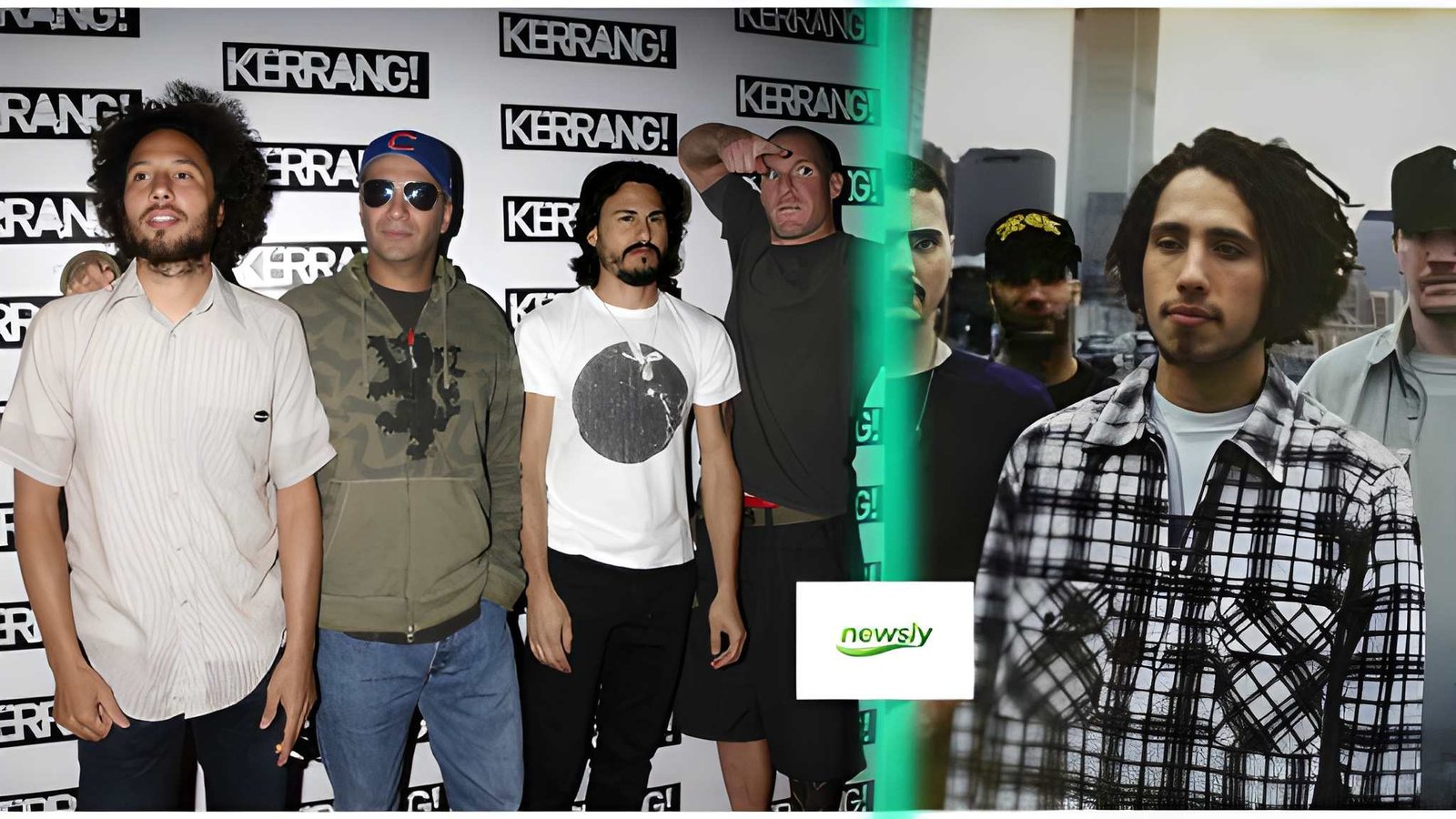
rage against the machine members were never just a lineup on a record sleeve. Zack de la Rocha, Tom Morello, Tim Commerford, and Brad Wilk became one of modern rock’s most charged combinations, joining rap, punk, metal, funk, and political outrage into a sound that still feels urgent today. Formed in Los Angeles in 1991, the band’s classic lineup remained centered on these four musicians, each bringing a different force to the group’s identity.
The Four Members Behind the Machine
| Member | Role in Rage Against the Machine | What He Brought to the Band |
|---|---|---|
| Zack de la Rocha | Lead vocals | Political fire, poetic anger, and a rap-influenced vocal attack |
| Tom Morello | Guitar | Experimental riffs, DJ-like effects, and radical guitar texture |
| Tim Commerford | Bass, backing vocals | Funk-driven weight, groove, and physical stage energy |
| Brad Wilk | Drums, percussion | Hard-hitting rhythm, restraint, and explosive live power |
Zack de la Rocha: The Voice of Pressure and Protest
Zack de la Rocha gave Rage Against the Machine its most direct human urgency. His voice sounded less like performance and more like confrontation. He did not simply sing over heavy music; he delivered lines with the force of a protest chant. His background in hardcore punk helped shape that intensity, while hip-hop gave him rhythm, precision, and attack. Among the rage against the machine members, de la Rocha was the clearest lyrical engine, turning political anger into memorable, repeatable, and deeply charged language.
Tom Morello: The Guitarist Who Made Noise Speak
Tom Morello changed what a rock guitar could sound like inside a political band. Instead of relying only on traditional solos, he used pedals, toggles, feedback, scraping sounds, and unusual techniques to make the guitar feel mechanical, futuristic, and restless. Therefore, his playing became part of the band’s message. It sounded like systems breaking down. It sounded like wires burning. Among rage against the machine members, Morello became the architect of the band’s most instantly recognizable sonic identity.
Tim Commerford: The Bass That Gave Rage Its Body
Tim Commerford’s bass work gave the band its physical force. His playing carried funk, metal, and punk energy without becoming crowded or flashy. As a result, Rage Against the Machine songs often moved with a heavy, almost danceable tension. Commerford’s bass lines gave space to Morello’s guitar experiments and de la Rocha’s vocals, while still pushing the music forward. In many ways, he was the muscle of the group, grounding the band’s politics in rhythm and body movement.
Brad Wilk: The Drummer Who Held the Explosion Together
Brad Wilk’s drumming gave Rage Against the Machine discipline. His style was powerful, but it was never careless. He understood when to hold back, when to leave space, and when to hit with full force. Consequently, the band’s most aggressive songs still felt controlled and sharp. Wilk’s work helped make Rage sound larger than a four-piece band. Among rage against the machine members, he often played the least visible role, yet his timing and weight were central to the band’s impact.
Table of Contents
Why This Lineup Worked So Well
The power of Rage Against the Machine came from contrast. Zack de la Rocha brought verbal fire. Tom Morello brought invention. Tim Commerford brought groove. Brad Wilk brought structure. Together, they created music that felt both chaotic and exact. Moreover, the band avoided the feeling of four separate musicians competing for space. Each member served the larger idea. That is why the phrase rage against the machine members still points to more than biography; it points to rare musical chemistry.
A Band Built Around Conflict, Not Comfort
Rage Against the Machine became famous because the band made discomfort impossible to ignore. Their songs spoke about state power, racism, economic injustice, policing, empire, and resistance. Yet the music never sounded like a lecture. Instead, it sounded alive, loud, and physical. This balance mattered. The rage against the machine members understood that protest music needs feeling as much as message. Their songs worked because the listener could feel the pressure before fully unpacking the politics.
The Cultural Weight of Rage Against the Machine Members
The band’s influence reaches far beyond rock radio. Their music entered sports arenas, protests, political documentaries, college dorm rooms, and festival fields. In addition, their songs introduced many listeners to radical ideas through sound before theory. The rage against the machine members became symbols of a wider cultural tension: anger at institutions, distrust of corporate power, and frustration with inequality. Their success also created a contradiction, because their anti-corporate music moved through major-label channels and mainstream platforms.
Reunion, Legacy, and the End of the Live Era
Rage Against the Machine reunited more than once, including a planned 2020 tour that was delayed by the pandemic and later disrupted after Zack de la Rocha suffered an injury during the 2022 run. In 2023, the band was inducted into the Rock & Roll Hall of Fame, and in 2024 drummer Brad Wilk said the band would not tour or perform live again.
Conclusion
The story of rage against the machine members is the story of four musicians whose differences created power. Zack de la Rocha gave the band its moral heat. Tom Morello gave it a new guitar language. Tim Commerford gave it weight and movement. Brad Wilk gave it control and force. Together, they made protest sound unforgettable. Their legacy remains because their music did not simply describe anger; it gave that anger rhythm, intelligence, and a place to go.
FAQs About Rage Against the Machine Members
Who are the main Rage Against the Machine members?
The classic members are Zack de la Rocha, Tom Morello, Tim Commerford, and Brad Wilk.
Who is the lead singer of Rage Against the Machine?
Zack de la Rocha is the lead vocalist and main lyrical voice of the band.
Who plays guitar in Rage Against the Machine?
Tom Morello is the guitarist, known for his experimental sound and political identity.
Are Rage Against the Machine members still performing together?
Brad Wilk said in 2024 that the band would not tour or perform live again.
Why are Rage Against the Machine members so influential?
They fused political commentary with rap, metal, punk, and funk in a way that felt direct, emotional, and musically original.
